
.png)
Corporate Gifting
Why Your Business Needs a Corporate Gifting Strategy in 2026 (And How to Build One)
Most companies don’t have a corporate gifting strategy. They have a Diwali panic.
Every October, someone from HR or Procurement scrambles to order “something nice” before the festive rush hits. Orders go in too late, products arrive with rushed printing, and whatever lands on the recipient’s desk looks exactly like what it is: an afterthought.
The result? You’ve spent the budget, but your brand didn’t move the needle. Relationships weren’t strengthened. And next year, you’ll do it again.
A real corporate gifting strategy changes all of that. This post will show you why it matters in 2026 specifically, how to build one from scratch, and what to put in it — whether you’re buying for 50 employees or 5,000 channel partners.
What’s Changed About Corporate Gifting in 2026?
Three things have shifted in the last couple of years that make having a proper strategy more important than ever.
Recipients have higher expectations
People have been on the receiving end of bad corporate gifts for years. They know what a last-minute order looks like. A generic mug or a plastic pen with a smudged logo no longer signals appreciation — it signals indifference. The bar for what feels thoughtful has gone up.
Procurement teams are under more scrutiny
Gifting budgets are no longer invisible line items. Finance teams want to see ROI. HR leaders want to tie gifts to engagement outcomes. Founders want proof that the spend on bulk corporate gifts is actually building something — loyalty, retention, pipeline. That means you need a framework, not just a vendor.
The gifting calendar has expanded
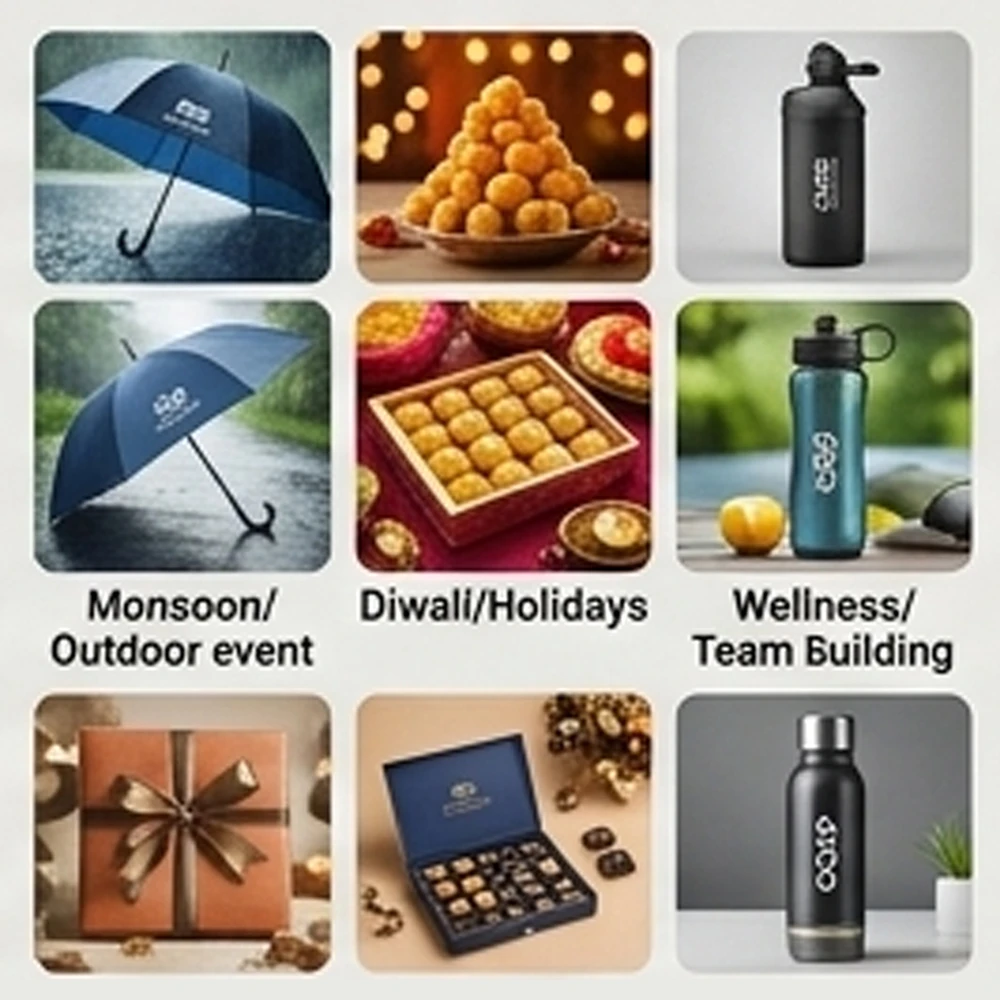
It’s no longer just Diwali and year-end. Employee onboarding kits, work anniversaries, sales incentive programs, client retention milestones, new partnership celebrations — companies that do gifting well are doing it year-round, not in one annual burst.
What Does a Corporate Gifting Strategy Actually Include?
A strategy is not a product catalogue. It’s a set of decisions made in advance so that every gifting moment is intentional, on-brand, and measurable. Here’s what it needs to cover:
1. Define your gifting objectives
Start with the why. Different objectives lead to very different choices:
- 1. Employee retention and morale: gifts tied to milestones, anniversaries, and onboarding
- 2. Client relationship management: gifts that reinforce your brand at key touchpoints
- 3. Channel and distributor loyalty: incentive-led gifting for sales partners
- 4. Brand awareness at scale: high-volume, lower-cost items for events and activations
You might have more than one objective, and that’s fine — but each should have its own product tier, budget band, and delivery mechanism.
2. Segment your recipients
Not everyone on your gifting list should receive the same thing. A C-suite client deserves something different from a distributor rep, who deserves something different from a new joiner. Segment your list into at least three tiers — premium, mid-range, and volume — and assign product categories to each.
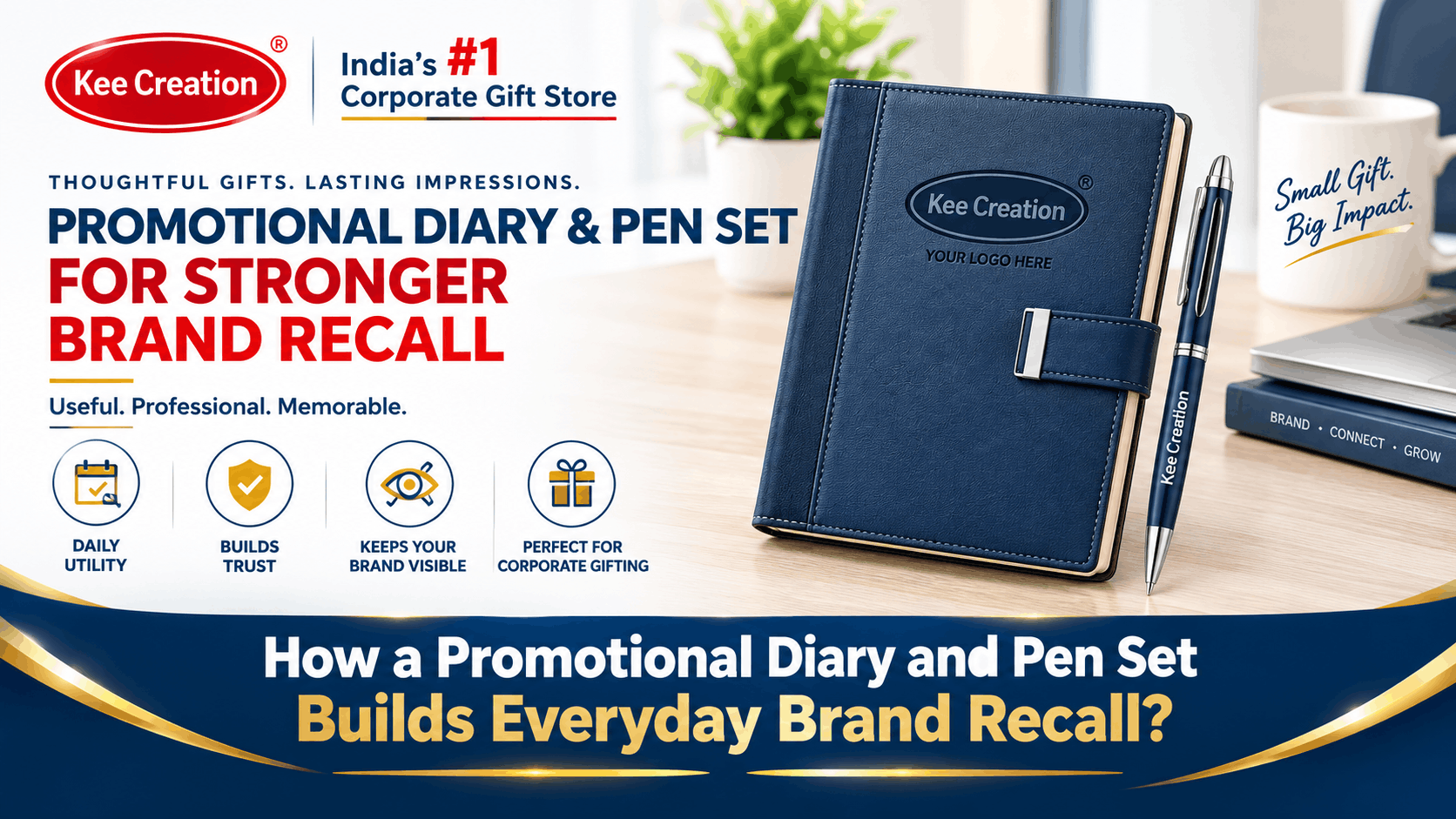
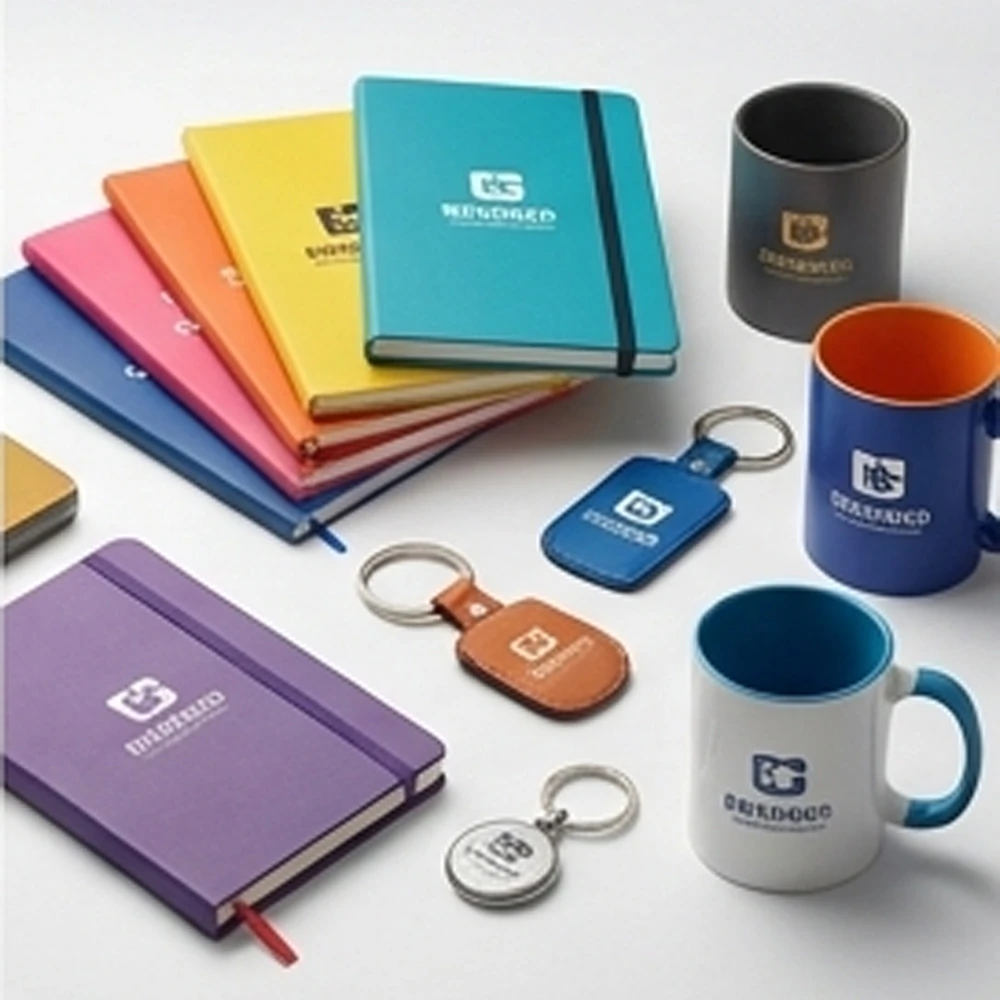
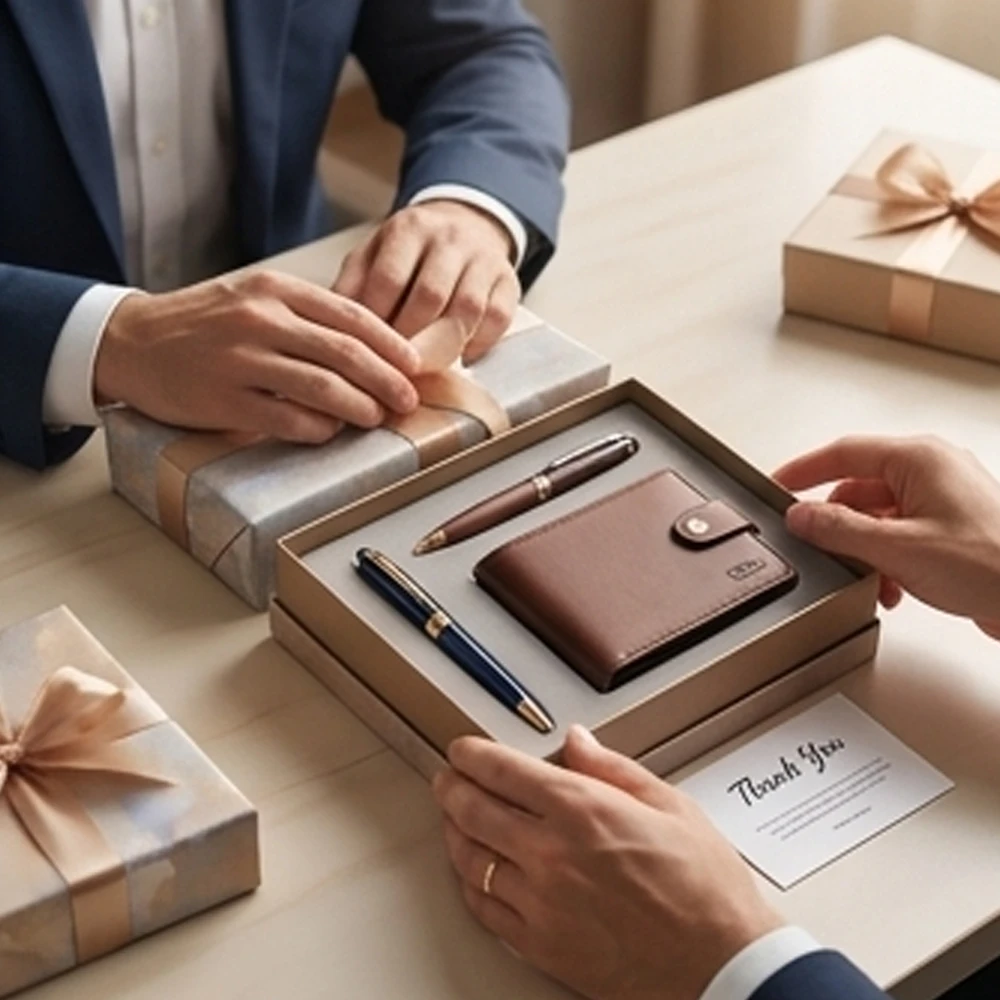
A common approach used by companies we work with at Kee Creation: premium clients receive customized notebooks for business paired with a quality pen — a promotional diary and pen set with tasteful branding feels considered, not cheap. Mid-range recipients might receive a well-made keychain or a branded desk accessory. Volume distribution tiers get functional, durable items like promotional pens or bottle openers.
3. Build your gifting calendar
Map out every gifting occasion across the year. Include:
- 1. Festive gifting windows: Diwali, New Year, Holi, and financial year-end
- 2. Employee milestones: work anniversaries, promotions, onboarding, retirements
- 3. Client touchpoints: contract renewals, deal closings, gratitude notes
- 4. Events and activations: trade fairs, product launches, conferences
Once you have the calendar, work backwards from each date to set order deadlines. This is how you stop the Diwali panic from happening every year.
4. Set budget bands per tier
A tiered budget makes decisions faster. You don’t need to debate every single order if you’ve already decided that client-tier gifts sit between ₹500–₹1,500 per unit and volume distribution gifts sit between ₹75–₹200 per unit. These numbers will vary by industry and company size, but having them written down removes friction at the point of purchase.
5. Set brand guidelines for gifting
Your gifts are brand touchpoints. That means logo placement, colour accuracy, and packaging all matter. Create a short brief that your supplier can follow consistently — logo file format, brand colours in Pantone or CMYK, preferred finish (matte vs gloss, engraved vs printed), and packaging style.
A gift that arrives with the wrong shade of blue, or a logo that’s off-centre, quietly undermines your brand. It’s worth the ten minutes it takes to write this down.
Which Products Should Anchor Your Corporate Gifting Strategy in India?
Product choice depends on your segments and objectives, but some categories consistently deliver strong results across different industries and budgets.
Diary and pen sets for premium gifting
A promotional diary and pen set is the workhorse of premium corporate gifting in India. It’s universally useful, has high perceived value, and carries branding that’s visible every single day. The key is quality: a hardbound diary with a ribbon marker and smooth pages, paired with a pen that actually writes well. Done right, this is a gift people keep for the full year.
For companies in financial services, consulting, pharma, or B2B services — where relationships are built slowly and impressions matter — this is often the right anchor product for your premium tier.
Customized notebooks for mid-range and bulk
Softer cover, more flexible format, lower price point. Customized notebooks for business work well for employee onboarding kits, conference giveaways, and distributor gifting where you need volume without sacrificing perceived quality. A clean design with subtle branding goes further than a logo plastered across the cover.
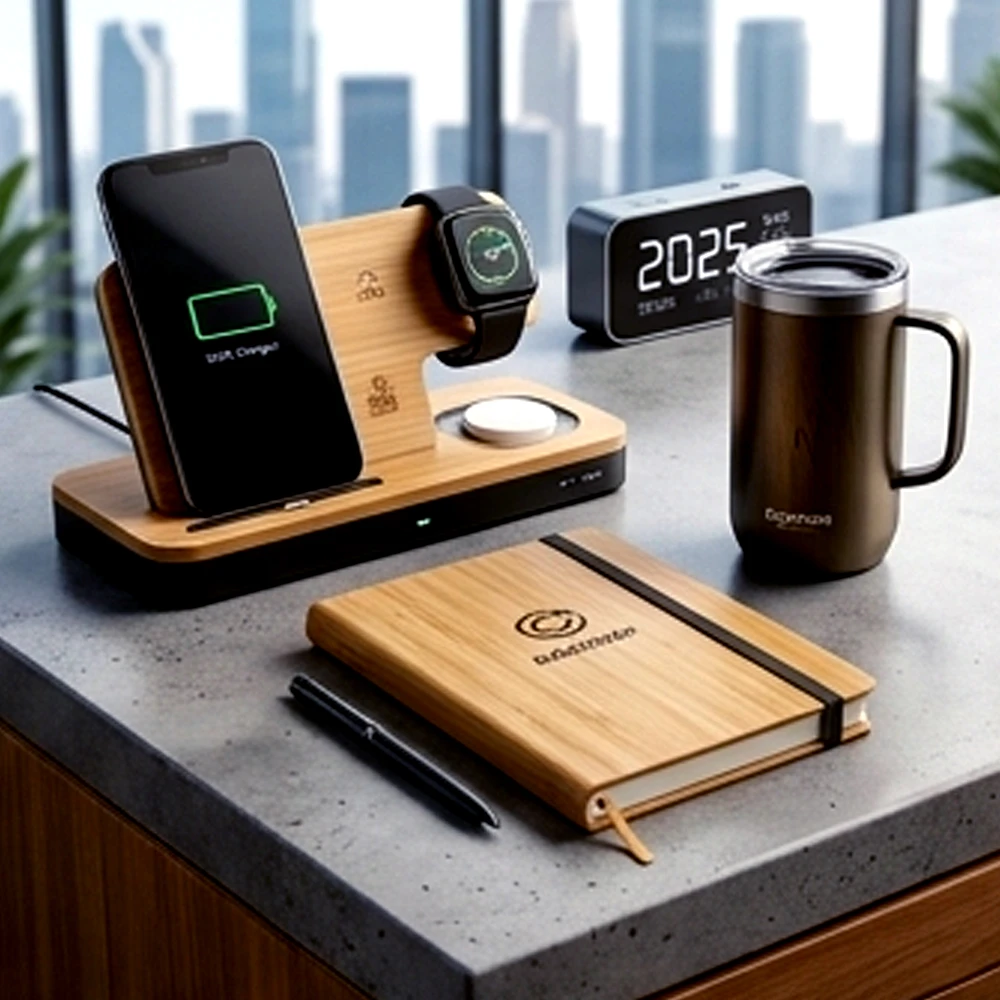
Branded desk accessories for office-based recipients
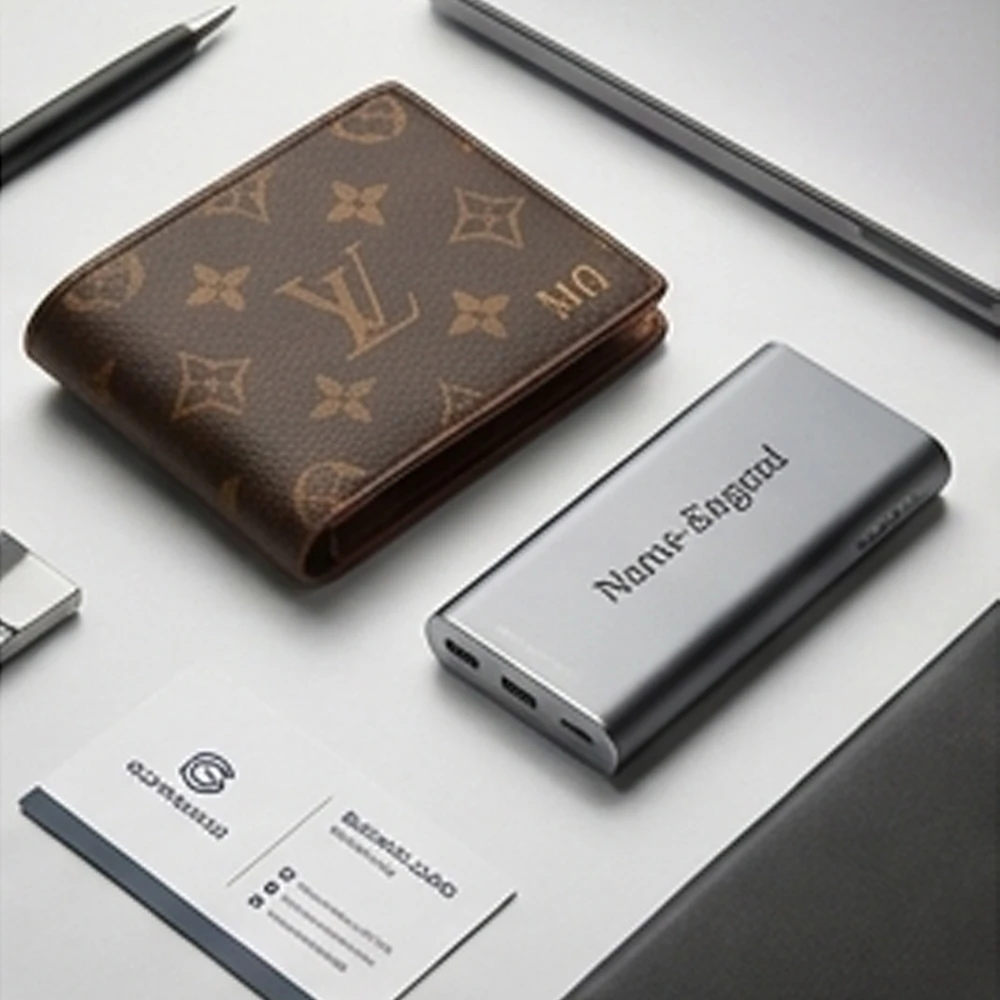
Pen stands, paperweights, and business card holders are quiet, long-lasting brand placements. They sit on someone’s desk for months or years. For clients and senior employees, a well-crafted desk item signals premium without being flashy.
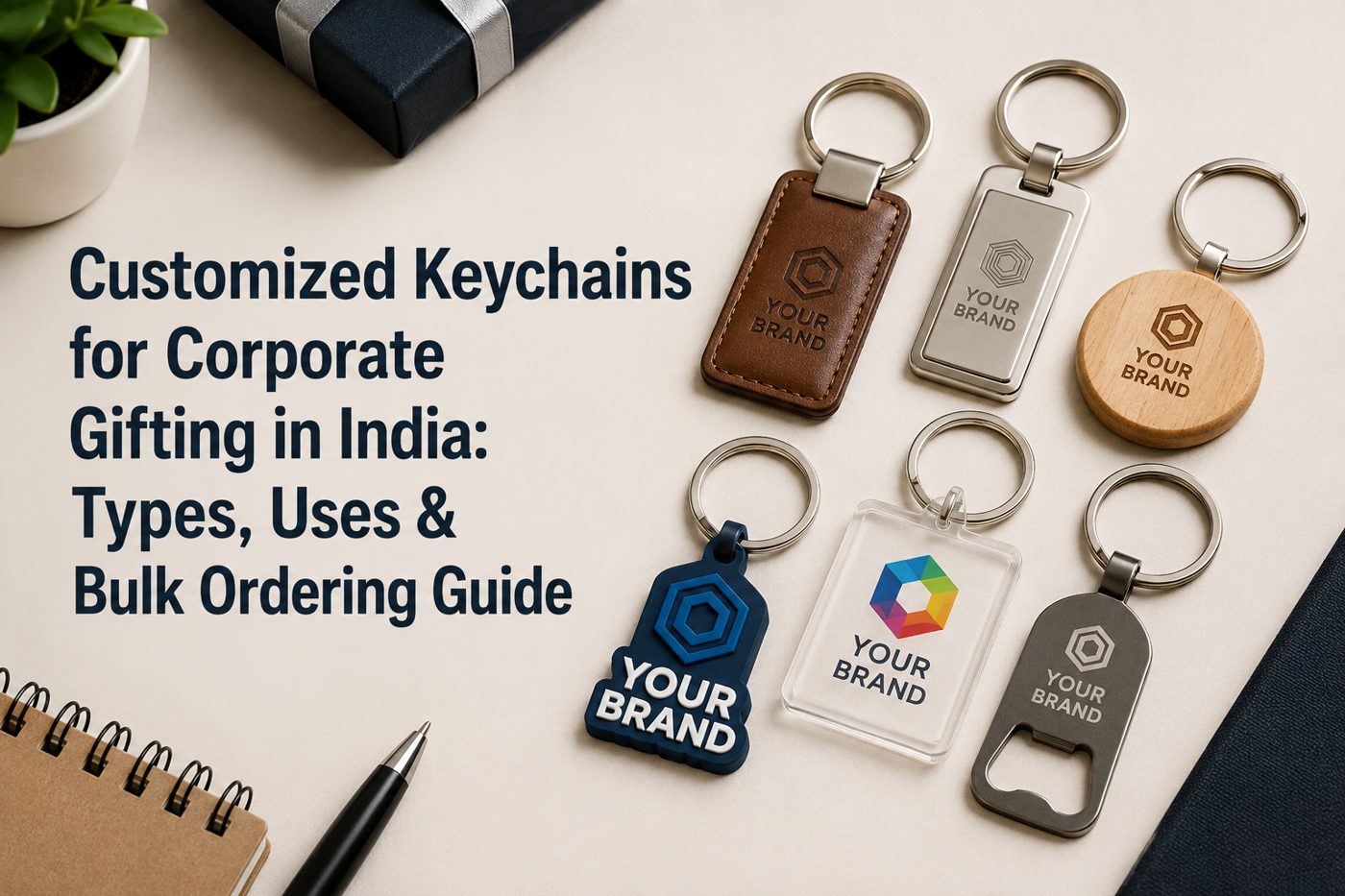
Keychains and everyday carry for volume distribution
When you’re gifting at scale — distributor networks, retail partners, field teams — you need something durable, useful, and cost-effective. A quality metal or rubber keychain fits that brief better than almost anything else. It’s carried daily, seen constantly, and has a per-unit cost that makes large runs viable.
How Do You Measure Business Gifting ROI?
This is the question Finance will eventually ask, so it’s worth having an answer ready.
The honest truth: business gifting ROI is partly direct and partly indirect. Here’s how to think about each.
Direct metrics you can track
- 1. Client retention rate in accounts where structured gifting was introduced vs. those where it wasn’t
- 2. Employee engagement scores before and after implementing milestone-based gifting
- 3. Repeat order rate from distributor tiers that received gifting vs. those that didn’t
- 4. Response rates to outreach when a physical gift precedes digital follow-up
Indirect value that’s harder to quantify but real
Brand recall, goodwill, word-of-mouth, and relationship depth don’t show up neatly in a spreadsheet. But they compound. A client who received a thoughtful Diwali gift is more likely to take your call, give you a referral, and extend a contract. That value is real — it just takes longer to show up.
The simplest measure: track whether gifting correlates with relationship milestones. Did the client renew? Did the employee stay? That’s your signal.
Common Mistakes to Avoid When Building a Gifting Strategy
Treating every recipient the same
A one-size-fits-all approach signals that you didn’t think about the person. Segmentation isn’t complicated — three tiers is enough to make gifting feel considered rather than automated.
Ignoring packaging
The box a gift arrives in is part of the gift. Unboxing creates a first impression that the product alone can’t recover from if it’s wrong. Even simple packaging — a branded box, tissue paper, a card — elevates the entire experience.
Ordering without brand guidelines
Inconsistent branding across your gifting programme makes your company look disorganised. Set a standard and hold your supplier to it. At Kee Creation, we ask for brand guidelines upfront precisely to avoid this — the goal is for your product to look like it came from the same company every single time.
Leaving budget to chance
If gifting isn’t budgeted in advance, it gets cut when things get tight. Treat it like any other marketing or HR line item: allocate at the start of the financial year, assign it to the right cost centre, and protect it.
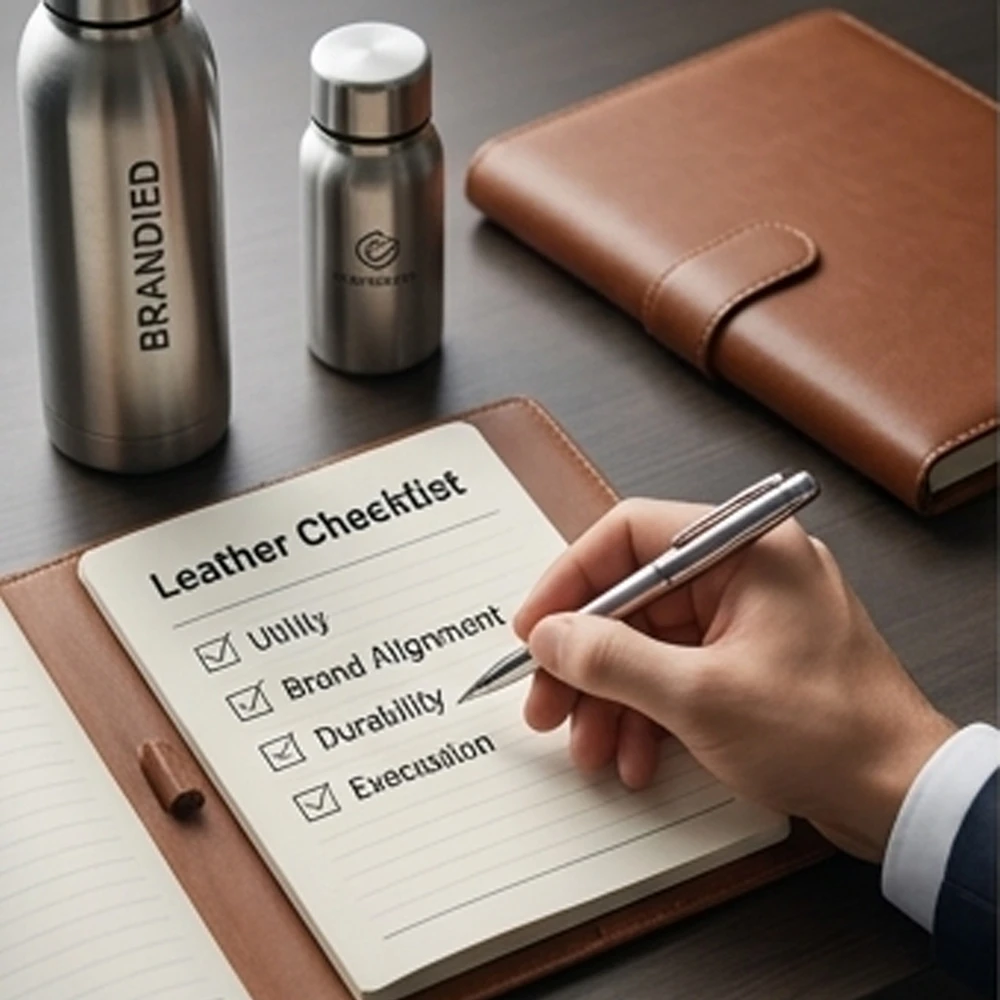
Your Corporate Gifting Strategy Checklist for 2026
Use this before your next gifting run. If you can’t tick all of these, that’s where to start.
- 1. Define your gifting objectives — retention, brand, channel loyalty, or a mix
- 2. Segment your recipient list — at least three tiers: premium, mid-range, volume
- 3. Build a full-year gifting calendar — map every occasion, work backwards for lead times
- 4. Set budget bands per tier — decide per-unit ranges before approaching suppliers
- 5. Write a brand brief for your supplier — logo files, colours, finish preferences, packaging
- 6. Shortlist product categories per tier — diary + pen for premium; notebooks for mid; keychains for volume
- 7. Request samples before bulk order — never approve without a physical proof
- 8. Confirm MOQ, lead times, and packaging options — at least four to six weeks before the gifting date
- 9. Set a measurement plan — which metrics will tell you if it worked?
- 10. Review and iterate — what did recipients actually keep and use?
Printing this? Keep it on your desk before the next gifting cycle. Or send it to whoever owns gifting at your company — it’ll save them two hours of back-and-forth.
The Bottom Line
A corporate gifting strategy isn’t about spending more. It’s about spending with intent. When you know who you’re gifting, why you’re gifting, and what you want the recipient to feel — every rupee works harder, every product lands better, and your brand builds the kind of goodwill that doesn’t show up in a single quarter but compounds quietly over time.
The checklist above is a solid starting point. If you’d like help translating it into a product plan — whether that’s customized notebooks for business, a promotional diary and pen set, or a full gifting programme across multiple tiers — let’s talk.
Frequently Asked Questions
1. What is a corporate gifting strategy and why does it matter?
A corporate gifting strategy is a planned approach to when, what, and why you give branded gifts — to employees, clients, or partners. It matters because ad-hoc gifting wastes budget and misses relationship-building opportunities. A strategy ensures every gift is intentional, on-brand, and tied to a measurable outcome.
2. What is a good budget for bulk corporate gifts in India?
It varies by industry and recipient, but a common framework: ₹75–₹250 per unit for high-volume giveaways (events, distributor networks), ₹300–₹800 for mid-range employee or partner gifts, and ₹800–₹2,000+ for premium client-facing gifts. The goal is high perceived value relative to cost — a well-made promotional diary and pen set, for example, can feel like a ₹1,500 gift at a fraction of that cost when bought in volume.
3. What are the best corporate gifts for employees in India in 2026?
Gifts tied to utility and daily use tend to land best. Branded notebooks and diary sets, quality pens, desk accessories, and personalised keepsakes for milestone occasions consistently score well in employee satisfaction. The key is personalisation — even a small detail like the person’s name or department on the packaging makes a difference.
4. How far in advance should I order bulk corporate gifts?
For most customised items, four to six weeks is the minimum. For large orders, complex branding, or festive windows like Diwali (when supplier capacity fills up fast), eight to ten weeks is safer. Ordering early also gives you time to review samples and fix any issues before the full run.
5. Can promotional products work as part of a corporate gifting strategy?
Absolutely — and many companies already blend the two without realising it. A customized notebook for business or a quality branded keychain can serve both as a promotional item at an event and as a corporate gift in a client kit. The difference lies in the context, packaging, and tier of the product, not the product itself.


















.png)
.png)
.png)
.png)
.png)